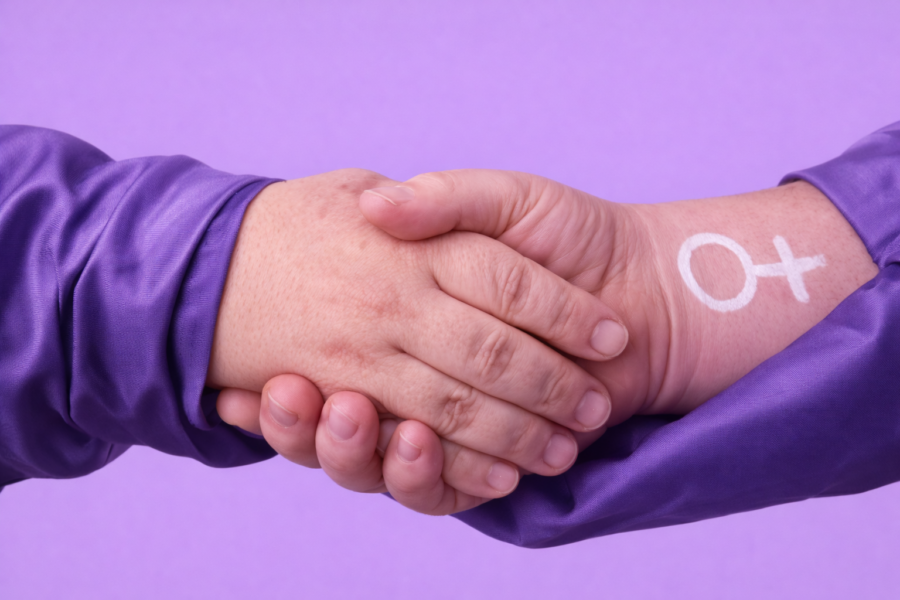
On International Women’s Day, the Association of People with Achondroplasia and Other Skeletal Dysplasias with Dwarfism (ADEE) wants to highlight a reality that continues to shape the lives of many women and girls: infantilization, prejudice, sexualization, the delegitimization of their voice, and other forms of everyday violence that are often minimized or dismissed as jokes.
Many women with achondroplasia and other skeletal dysplasias with dwarfism still hear phrases such as “Oh, it’s you?”, “Did you come alone?”, “How cute, and a professional too”, or even “You’re the perfect height for…”. These are not harmless comments. They are expressions that question their ability, authority, and autonomy, and turn their bodies and their presence into objects of judgment, ridicule, or harassment.
Everyday violence and infantilization
What is often presented as humour, curiosity, or help is, in reality, a form of violence. It is not affection to treat an adult woman as if she were a child. It is not help to make decisions for her. It is not a minor anecdote to doubt her ability before even listening to her.
Moreover, when a woman with achondroplasia reports harassment, humiliation, or violence and she is not believed, is minimized, or is invalidated, the discrimination becomes even greater. Infantilization operates there too: stripping her words of authority and diminishing the value of her experience.
8M must also serve to make visible the reality of women and girls with achondroplasia and other skeletal dysplasias with dwarfism, who continue to face prejudice, infantilization, sexualization, and the constant questioning of their autonomy every day.”
Carolina Puente, President of ADEE
The cumulative impact also requires a response
These experiences are not lived in isolation. They accumulate from childhood onwards and generate overexertion, emotional exhaustion, and invisible barriers that are often not even recognized. Having disproportionate short stature continues to mean structural discrimination for many women, affecting their wellbeing, their participation, and the exercise of their rights.
This is why more support is needed, not out of compassion, but from a rights-based approach. More psychosocial, educational, community, and institutional support is needed to prevent violence, sustain reporting processes, strengthen autonomy, and guarantee full social participation.
Needing more support cannot be interpreted through pity, but through justice. When a woman is more exposed to prejudice, invalidation, or everyday violence, what is needed is stronger guarantees, resources, and support so that she can exercise her rights on equal terms.”
Carolina Puente, President of ADEE
Caregiving mothers too
In this call, we also want to focus on mothers, many of whom are caregivers, who sustain the day-to-day lives of their daughters and sons while facing overload, exhaustion, and a lack of support. Talking about equality also means talking about care, shared responsibility, and real resources for families.
We also want to recognise caregiving mothers, who face a silent overload and invisible exhaustion that is rarely taken into account. Equality also means supporting, accompanying, and ensuring that these care responsibilities are not carried in isolation.”
Carolina Puente, President of ADEE
A shared demand
This reality is part of a broader demand for the rights of women and girls with disabilities. In this regard, ADEE highlights the importance of the work carried out by CEMUDIS in defending their rights and also recalls that it is a member entity of COCEMFE, within the disability movement.
We are not a joke. We are not a fetish. We are not eternal little girls. We are women.”
This 8M, from ADEE, we call for respect, voice, and dignity for women and girls with achondroplasia and other skeletal dysplasias with dwarfism, as well as for the many mothers who care for and support them every day. Because equality also means recognising their autonomy, their experience, and their right to live free from prejudice, condescension, and violence.
Learn more about ADEE’s work and follow our latest news